
Drive ’N Arrive #3

The goal of every vehicle journey is to arrive without a ticket or a crash.
This is the third in a series with updates and tips about safety on the road.
Beginning this past Spring, one of the strongest impacts on our driving was the uptick in diesel and regular gasoline prices. Reactions from those of us standing at the pump, watching the digits fly up fast than ever, cycle from worry to anger and back again.
Here today in Maryland, AAA Maryland reports the average price per gallon in the State at $3.75, compared to $3.88 nationwide.
But what if we faced heightened fuel prices as a but a challenge to regain some control of the situation, whether temporary or long term, by considering ways to change our behavior to reduce the costs?
For the most part, we know the drill: Combine trips, be gentle on the accelerator and brake pedals and ease our driving pace. The U.S. Department of Energy (DOE) states, “speeding, rapid acceleration and braking wastes gas,” and “aggressive driving can lower gas mileage by roughly 15% to 30% at highway speeds and 10% to 40% in stop-and-go traffic.”
DOE also notes, “While each vehicle reaches its optimal fuel economy at a different speed (or range of speeds), gas mileage usually decreases rapidly at speeds above 50 mph. It can be assumed that each 5 mph driven over 50 mph is like paying an additional $0.27 per gallon for gas.”
Here are additional recommendations from DOE for reducing the price at the pump:
Avoid hauling cargo on the roof of a vehicle, because it increases aerodynamic drag (wind resistance) and lowers fuel economy.
Avoid keeping unnecessary items in your vehicle, especially heavy ones.
Avoid idling, which can use a quarter to a half gallon of fuel per hour, depending on engine size and air conditioner use. Turn off the engine when the vehicle is parked. (It only takes about 10 seconds worth of fuel to restart the vehicle.)
Use cruise control on the highway to help maintain a constant speed. In most cases, this practice will save gas.
So, politics aside, there are actions we can take to lessen the damage from higher fuel costs.
Now for more good news!
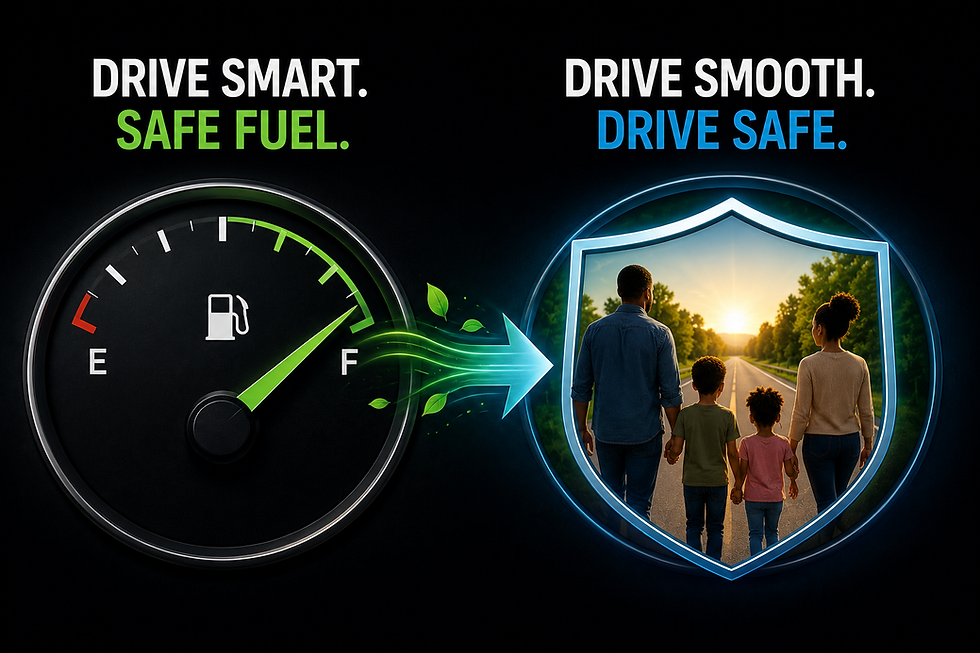
Safer, more patient fuel-efficient driving helps reduce road crash incidents as well.
2022 research conducted by Traffic Injury Research Foundation (TIRF) found that “eco-driving behaviors - such as gentle acceleration, smooth braking and maintaining a steady speed - not only cut fuel consumption and emissions by up to 15%, but also deliver measurable safety benefits.
These included fewer crashes and lower insurance premiums.
By Rhona Bosin


Comments